About the Artist
Charlie Callahan
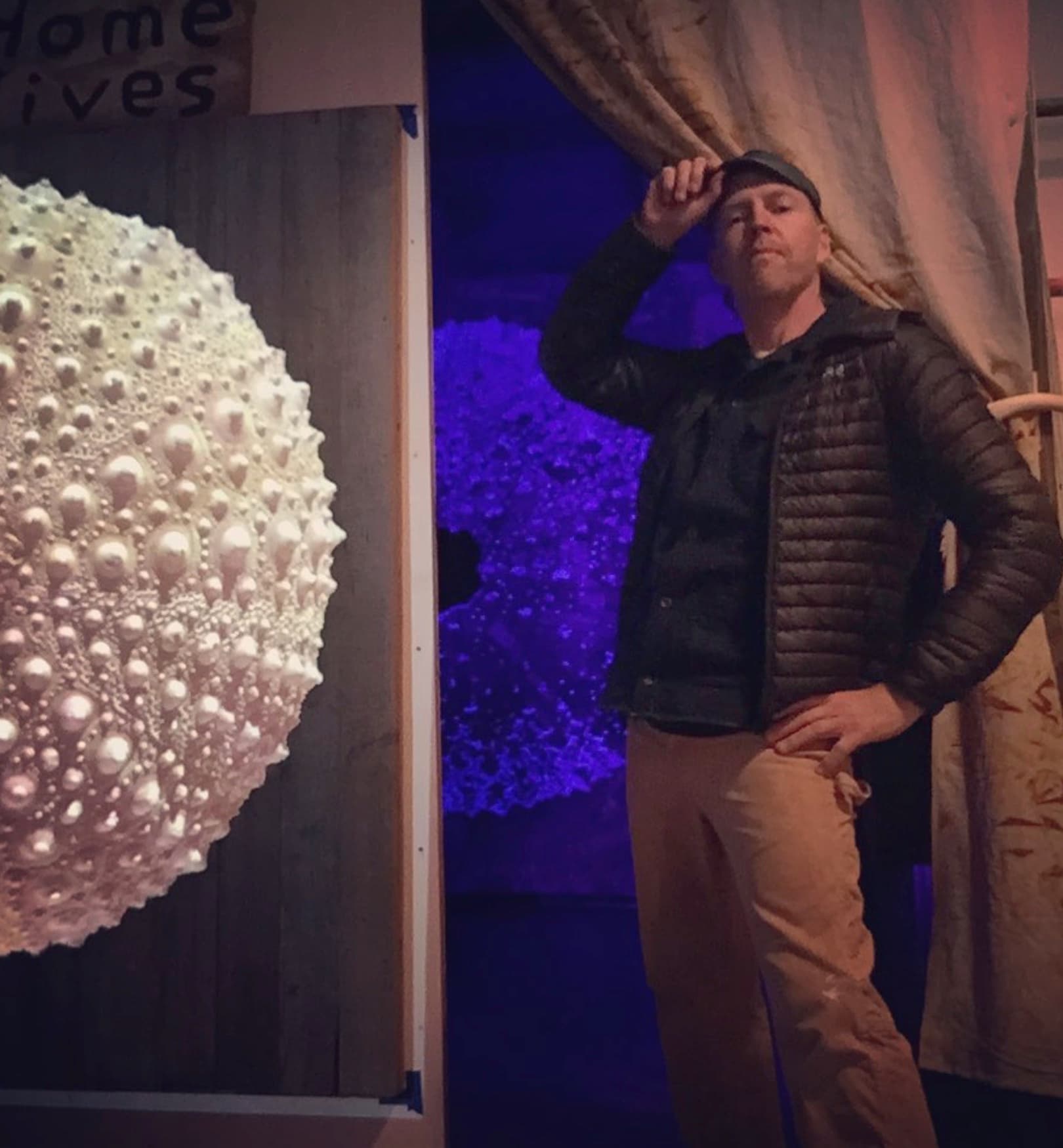
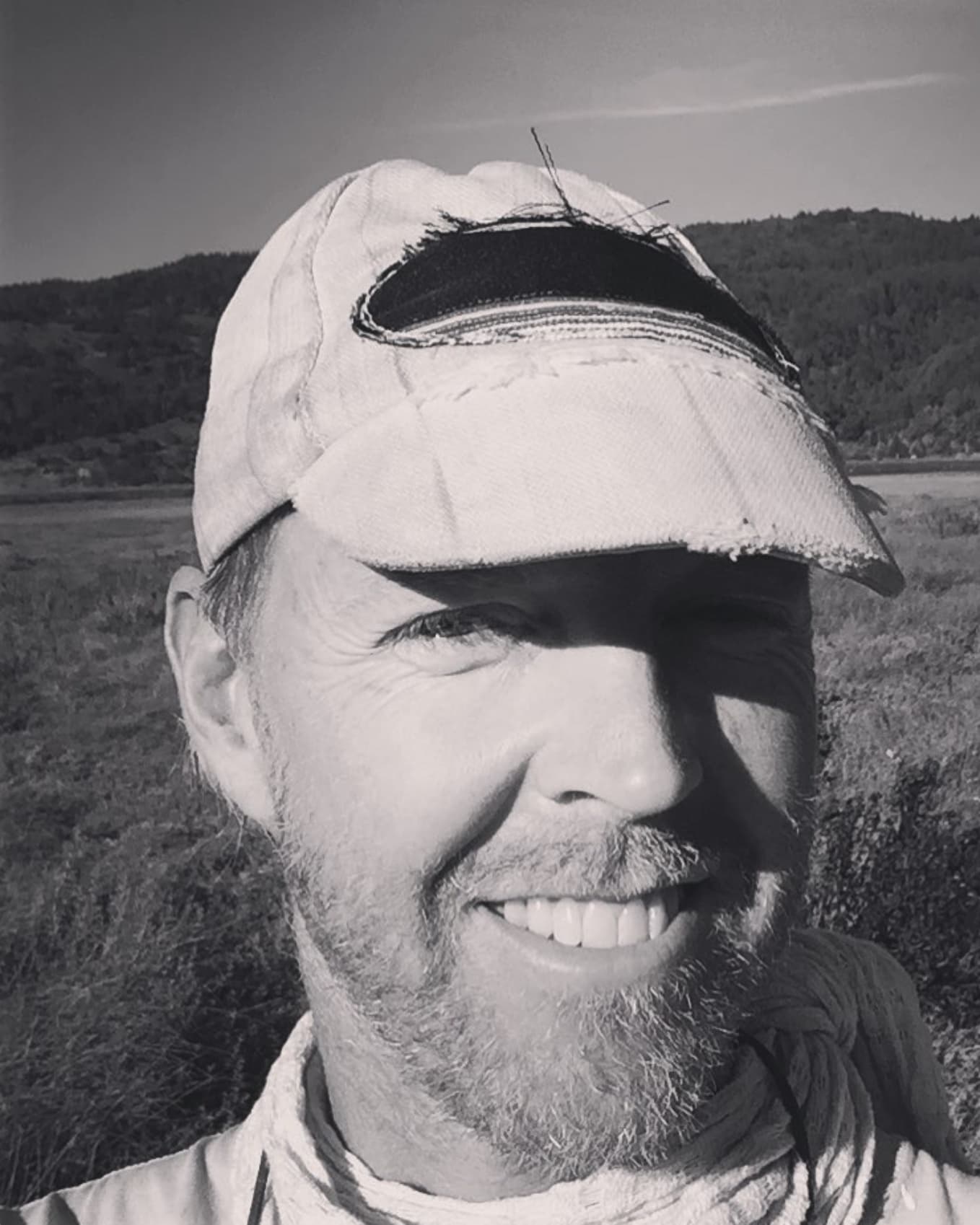
Charlie Callahan is a mixed media artist who lives and works in Bolinas, California, on the edge of the Point Reyes National Seashore. That coastline sits right beside his home and studio, and it gives him an endless store of reference material: tide lines, shells, beach litter, the creatures of the lagoon and the open Pacific. His work is driven by his love for the sea and for the immense web of life that depends on it. Born in 1974 in Columbus, Ohio, Charlie earned his BFA in 1998 from the Columbus College of Art and Design, studying 3-D design, fine art and painting. He went on to teach mural making, mask making, painting and drawing at New Vista High School in Boulder, Colorado, and later taught English through art at The May School in Hanoi, Vietnam. Residencies at Dry Gulch on Kauai, the Low Tide Club in Sausalito and Vermont Studios in Johnson, Vermont, broadened his practice along the way. At the center of his work is the sea urchin. Charlie is fascinated by its scavenger life and by the mandala pattern left on its shell once the spines are gone. Having survived earlier extinctions, the urchin became his icon: a time capsule of circular energy, older than our own fossil record. He is well known around the Bay Area for his many renderings of urchin skeletons, one of which is permanently installed at Outerlands restaurant in San Francisco's Outer Sunset. His paintings and installations celebrate, and question, humanity's relationship to the sea. Working with a wide range of styles and techniques, he experiments with pigment, polymers and resin on wood, canvas and walls, and builds shrine-like installations into raw architecture and temporary spaces. In his own words, he is creating a new mythology in which wild animals are gods whose survival depends on us. That vision came together in Returning Gold to the Sun, his first solo exhibition at the Bolinas Museum, curated by Jennifer Gately in 2015. Visitors stepped behind a black curtain into a black-lit room built from recycled redwood, where a glowing six-foot urchin mandala seemed to float from a curved wall, carrying underwater recordings made with field recordist Douglas Quinn. Over two decades Charlie has shown widely, from Space 868 in Bolinas, Receiver Gallery and Mollusk Surf Shop in San Francisco to Aqua Art Miami, Marianne Boesky in New York, the Tokyo San Francisco Art Festival and the Sugar Mountain Festival in Melbourne. He has painted murals for Facebook in Menlo Park and for the Juice Designs Quarterly project in San Francisco. A fixture of the Bolinas art and culture scene for decades, and a founding member of the improvisational band Fantasy Bracelet, Charlie keeps making new work. In 2026, under the name Batrayz, he presented Self Help 4 Toddlers at Small Works in San Francisco, a collection of images, sculptures and paintings offered as respite from the anxieties of mass extinction and the search for purpose.
“Creating a New mythology, wild animals are Gods where their survival depends on us.”
The Process
Inside the Studio
The Painting Process
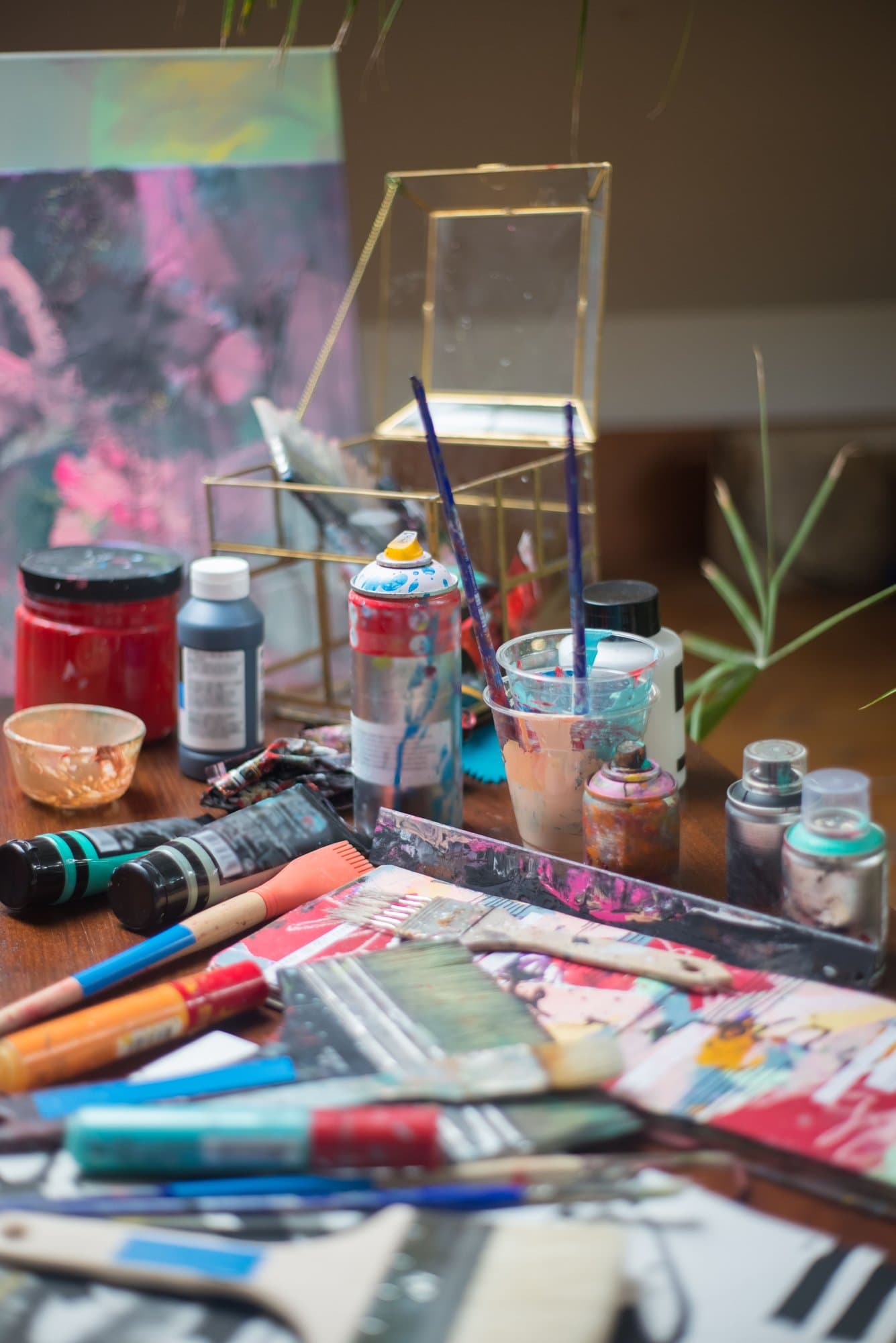
The Painting Process Charlie Callahan's process begins outdoors. The Point Reyes National Seashore lies right beside his home and studio in Bolinas, and he treats it as a working library: shells, tide pools, the lagoon, the creatures of the coast, even the bottle caps and litter that wash up on the beach. Much of what later appears in his studio starts as something found and studied at the water's edge. His central subject is the sea urchin. When an urchin dies and loses its spines, its shell reveals a radiating, circular pattern, and Charlie reads that pattern as a mandala. He paints it again and again, in many styles, letting it act as an icon of circular energy and as a reminder of a creature that has outlived earlier extinctions. Rather than holding to one technique, Charlie experiments. He works with pigment, polymers and resin, building up surfaces on wood and canvas, and he also paints directly onto walls. Some works use phosphorescent paint that only fully reveals itself under black light, so a piece can change completely when the room goes dark. Often a painting grows beyond its frame. For Returning Gold to the Sun at the Bolinas Museum, a six-foot urchin mandala was painted onto a curved wall sculpture made of individually cut, recycled redwood pieces. Seen in a darkened room, the glowing pattern seemed to float, and only as visitors walked around it did its shape and contour appear. Sound, video and found objects were set into the walls around it. He calls some of these spaces shrines: installations fitted into existing raw architecture or temporary rooms. Each piece, large or small, carries the same idea, a new mythology in which wild animals are honoured, and their survival depends on how we choose to live.